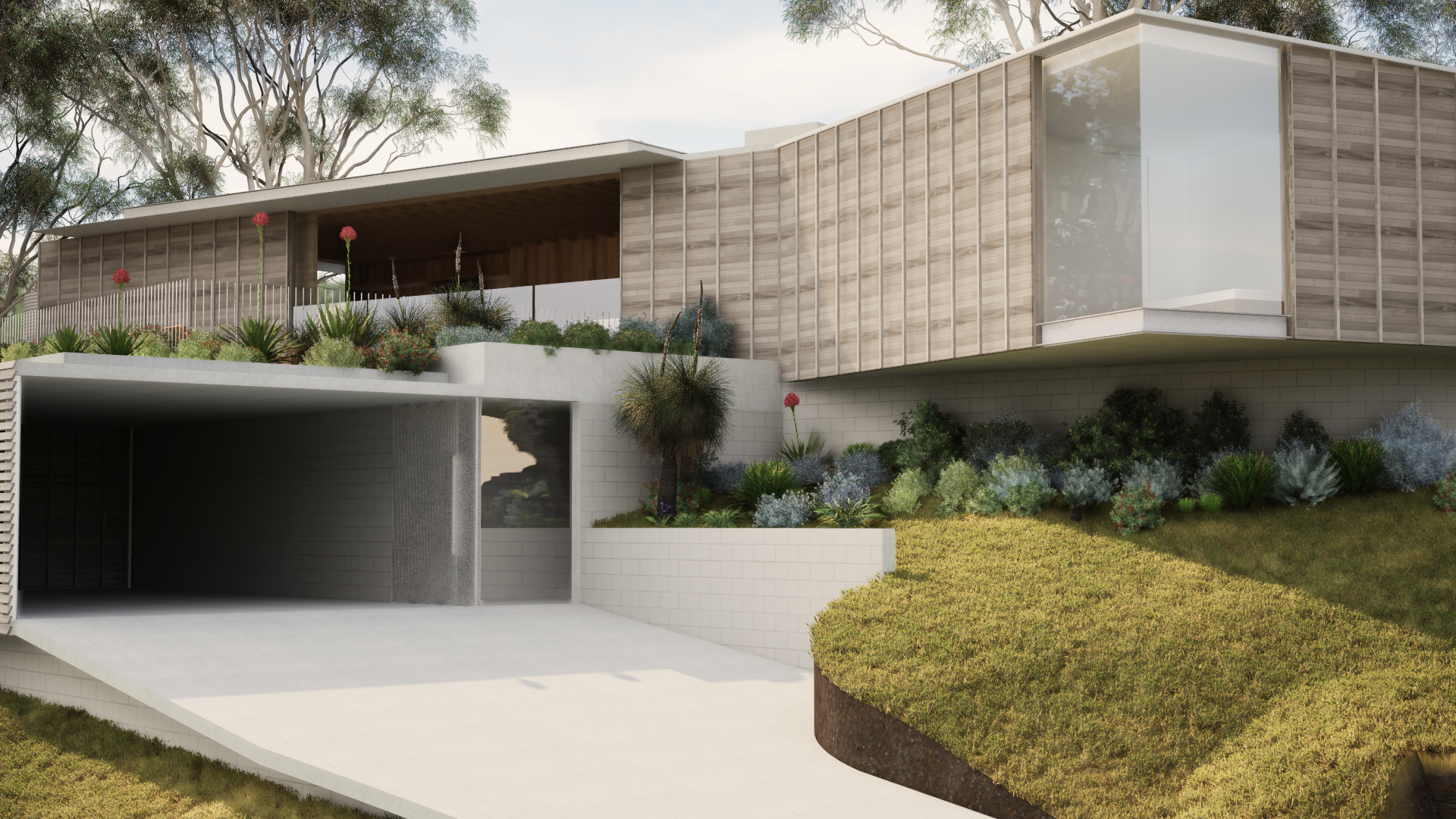
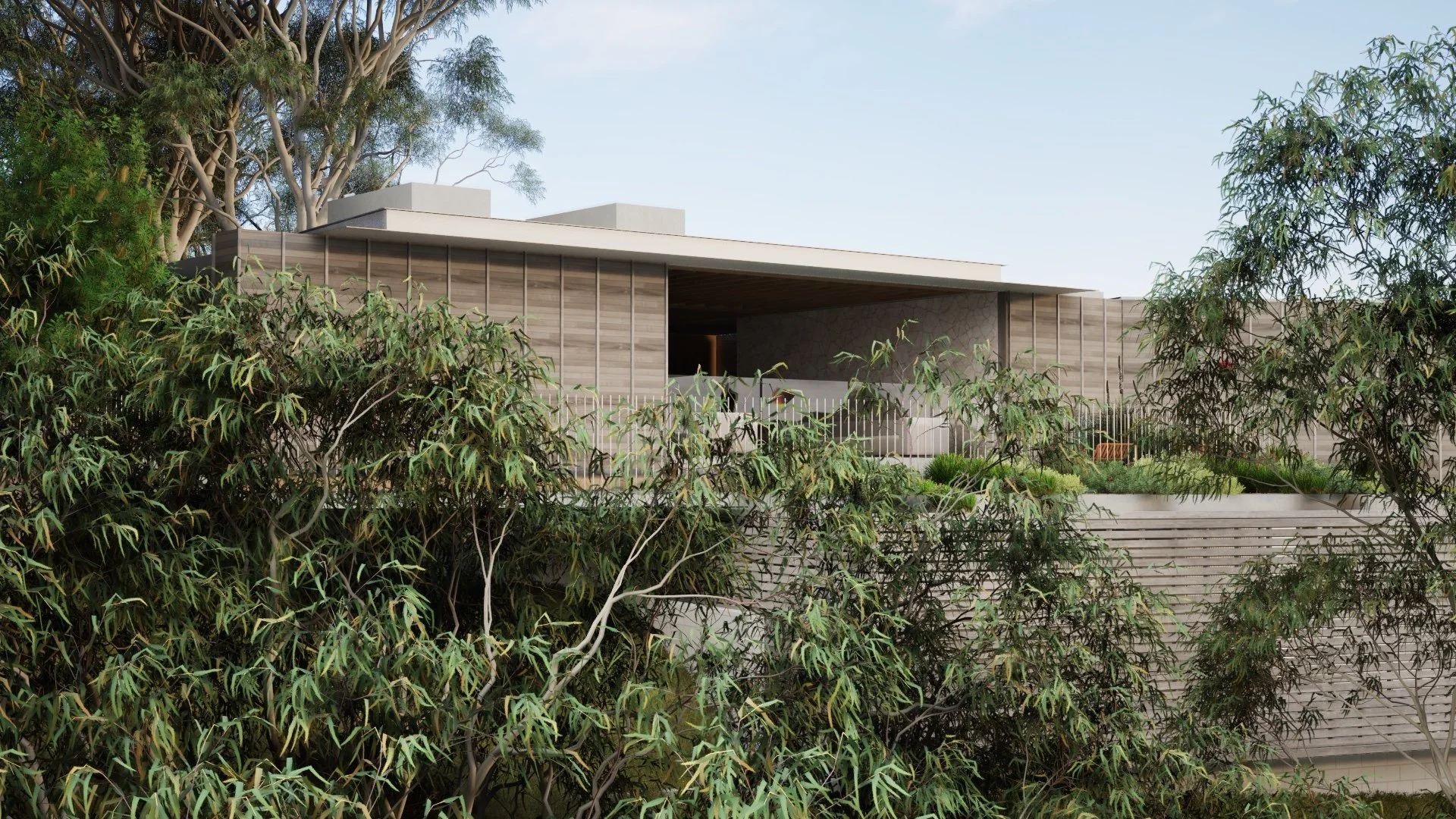
Without a traditional street frontage, the house retreats into the landscape, a quiet participant within its bushland setting. The buildings form is embedded into the sloping site, allowing the surrounding vegetation and topography to take precedence.
The narrow side access handle draws movement along the edge of the site, extending the approach and delaying the moment of entry. In doing so, the house resists the immediacy of a conventional street address, favouring a slower transition from public to private. The arrival reframes the relationship between house and street, allowing the landscape to lead and the architecture to follow. Embedded within the slope, the building reads as a continuation of the terrain rather than an object placed upon it, with vegetation, ground plane and form working together to establish a quiet and grounded presence.
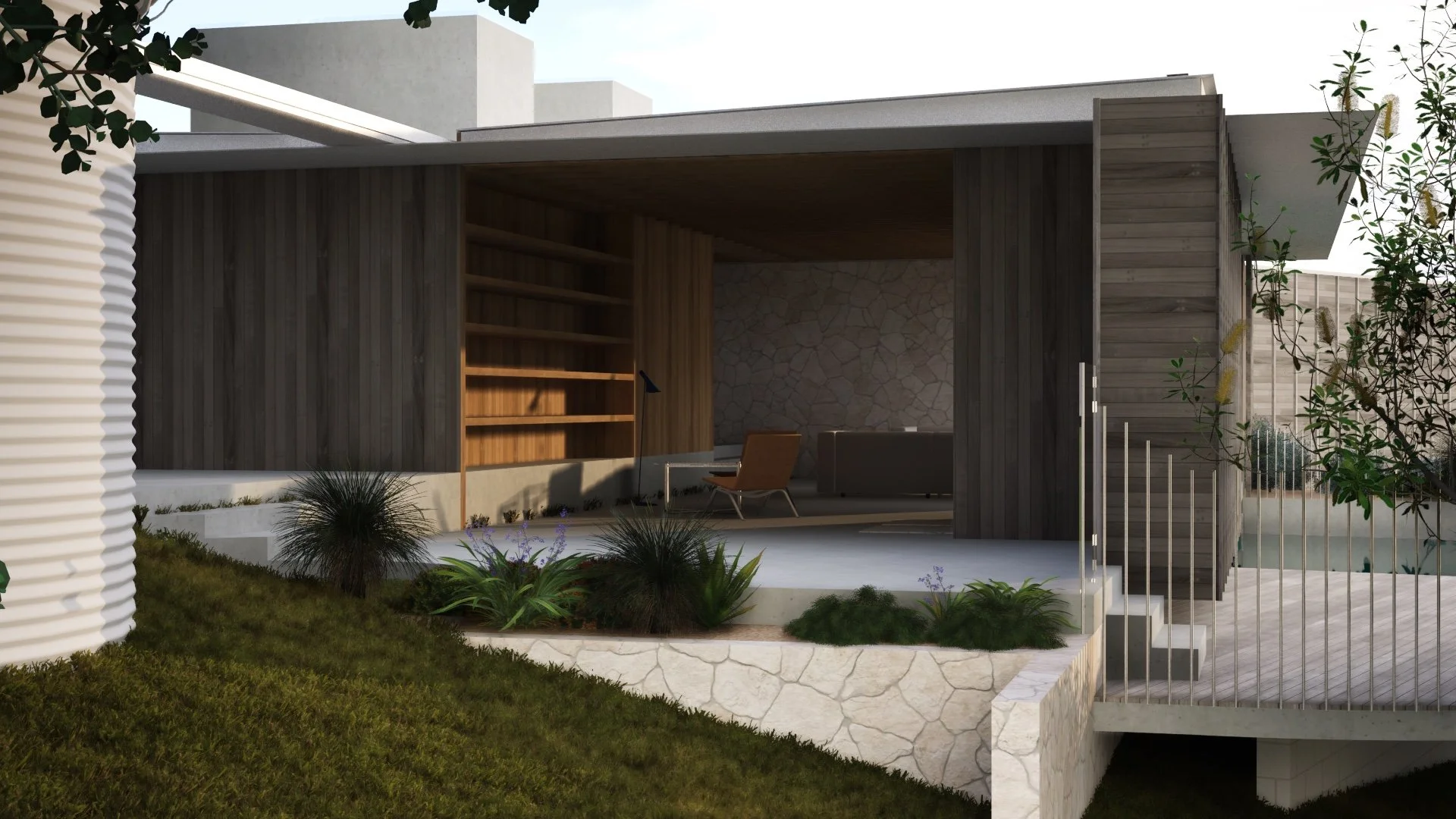
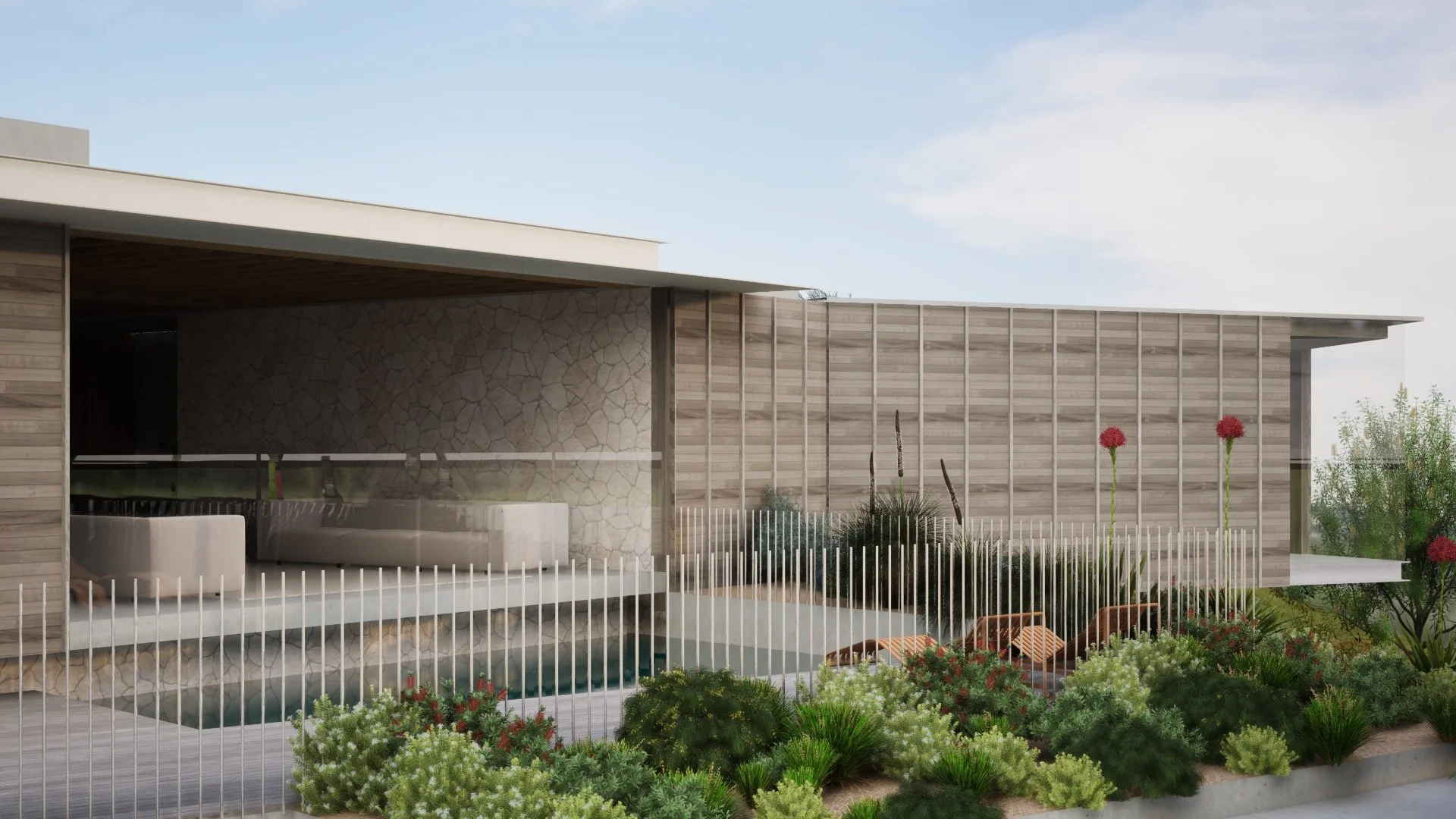
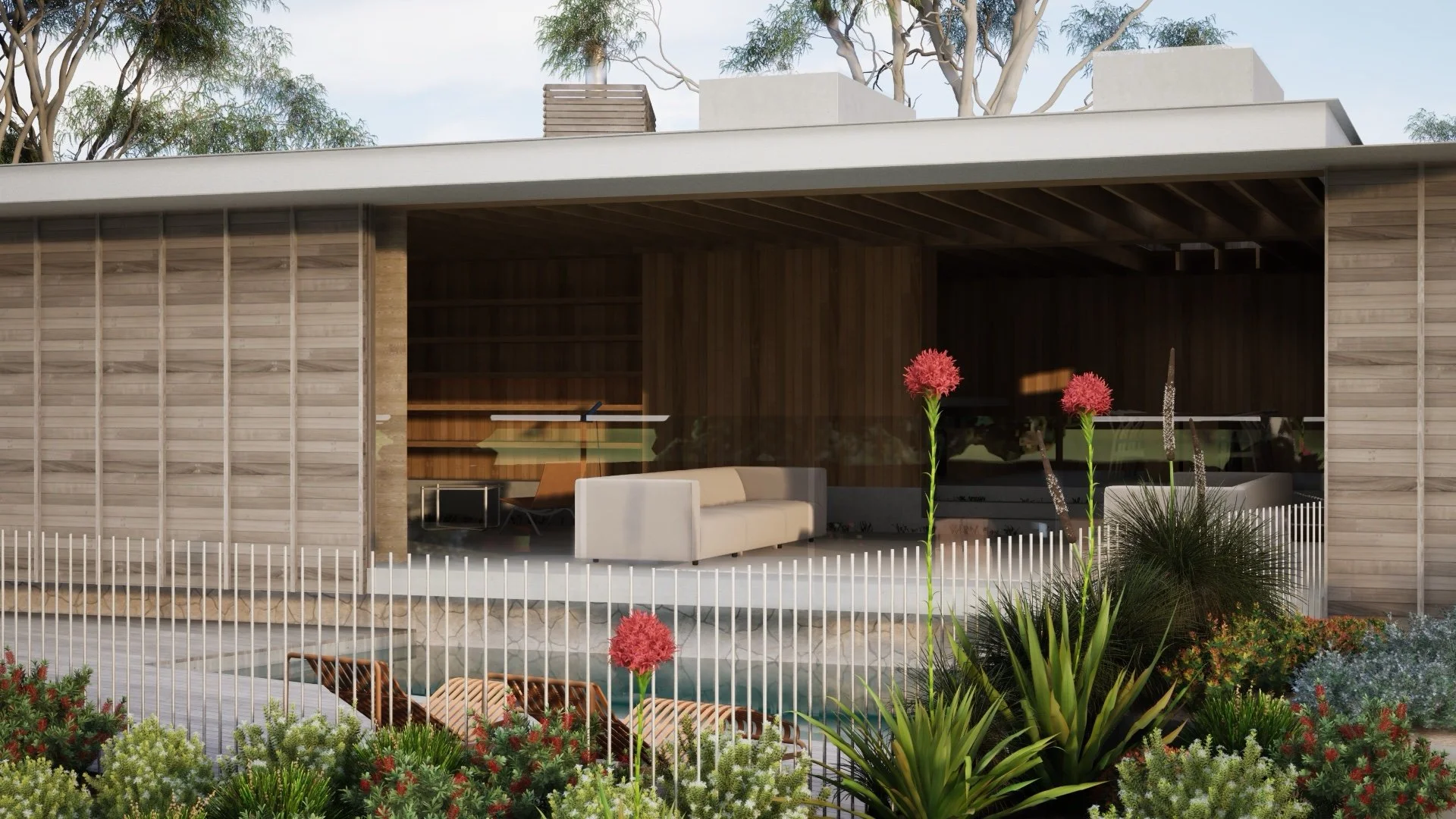
Beyond the moment of arrival, the house is organised around the slope. Living spaces are drawn closer to the natural ground plane, maintaining a direct connection with the landscape and garden, while more private rooms are lifted above the site where the terrain falls away. This sectional separation creates moments of height and levitation, allowing the private areas to float lightly above the ground while the public spaces remain grounded.This sectional arrangement allows the building to remain low in the landscape, spreading laterally across the terrain rather than asserting height.
Material choices reinforce this sense of grounding. Robust masonry and concrete elements anchor the house to the terrain, while timber screens and linings introduce warmth and porosity, filtering light, air and views. These layered elements modulate privacy and exposure, allowing the building to shift between openness and enclosure in response to season, time of day and occupation.
Outdoor spaces are treated as extensions of the interior rather than residual zones. Terraces, courtyards and planted edges blur the boundary between inside and out, creating a sequence of sheltered and open conditions that encourage movement through the house and landscape alike. In this way, the architecture remains secondary to its setting — shaped by the site, responsive to climate, and quietly embedded within its bushland context.
Year: 2025/2026 (Development Approval Stage)
Location: Northern Rivers
Country: Arakwal
Built: Nobo Build
Structural engineering: Philip Wallace Consulting Engineers